 Skip to content

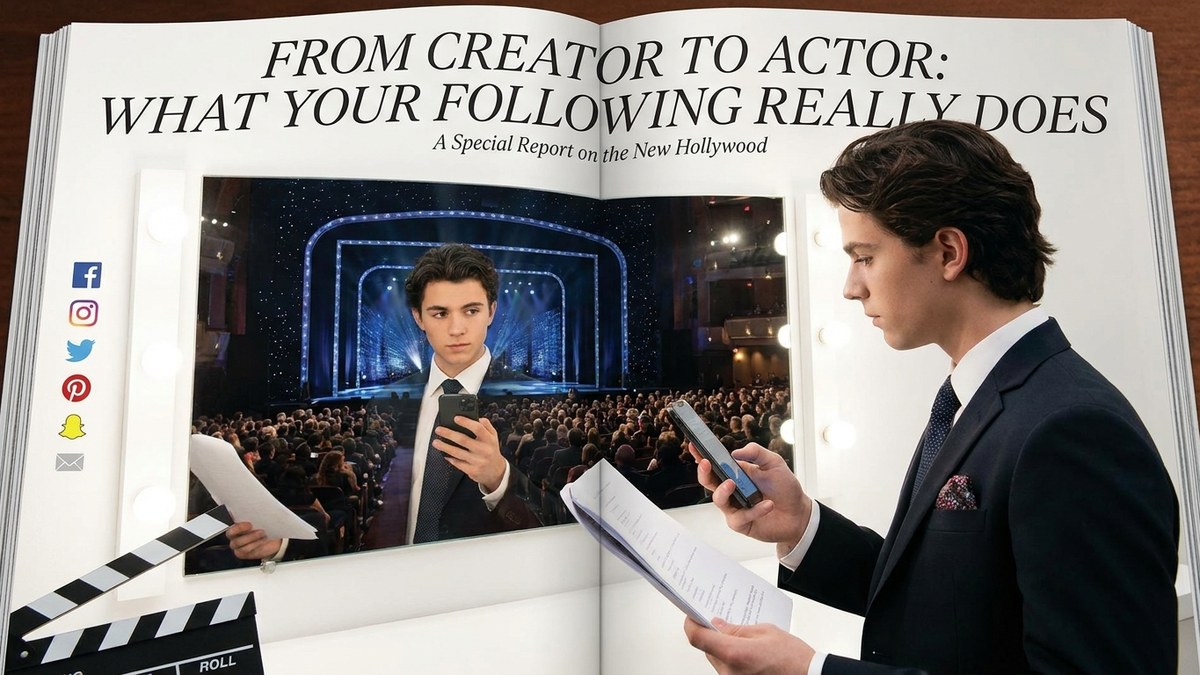
Can Social Media Influencers Become Actors? The Two Doors Problem
A following can get you seen. It cannot do the work of becoming someone else.
The central idea: A following can create an opportunity in Hollywood, but performance craft—not popularity—determines whether a creator can sustain an acting career.
Imagine two people walking into the same audition. One has two million followers and has never played a character. The other has forty thousand followers and three years of scripted sketch work.
The first person may have had an easier time getting noticed. The second may be better prepared for the scene.
That is the central misunderstanding in the creator-to-actor conversation. Social media has changed who can get an introduction. It has not changed what a convincing performance requires.
The First Door Is Attention. The Second Is Ability.
A following can make a casting director curious. It cannot make a performance convincing. Those are two different doors, and the mistake is assuming that opening one unlocks the other. A creator with a large audience may have a commercial advantage when a production wants recognition or promotional reach. But when the question is whether someone can inhabit a character, sustain a scene, and respond to direction, the audience becomes background information.
Attention can open the first door. Craft is what gets you through the second.
You Have Practiced Being Yourself. Acting Asks for Someone Else.
Creators learn to make their own instincts visible. They control the frame, the cut, the pace and often the script. That is a real creative discipline. Acting asks for a different kind of control: the ability to surrender your usual persona, listen to another performer and serve a story you do not own. Sketch comedians and character creators may have a head start; a lifestyle creator may need to begin further back. Neither is defined by follower count.
The Follower Introduction Can Change the Room.
There is a temptation to lead every introduction with the biggest number: followers, views, engagement. In brand negotiations, those numbers are commercially relevant. In a casting conversation, they may frame you as distribution rather than performance. That does not mean hiding a following. It means knowing which qualification the room is evaluating. Lead with the work. Let the audience become the additional advantage, not the entire argument.
For a practical look at the casting process, see Casting Networks and the SAG-AFTRA resources for performers. Neither replaces individual professional guidance.
The Economics Are Harder Than the Audition.
A working creator already has a business. Classes, self-tapes, callbacks and small productions compete with the same hours that sustain it. A missed content schedule can affect momentum; a rushed audition can affect the performance. The challenge is not simply learning to act. It is financing a second career without starving the first. Protect your publishing rhythm, negotiate sustainable brand work and delegate operations where the economics justify it.
The Better Question Is Whether You Want to Act.
Not every creator wants to perform someone else’s story. Some want prestige, wider recognition or the validation of a traditional screen credit. But content creation already offers unusual independence: ownership of an audience, control over subject matter and the possibility of building original intellectual property. Acting is not a promotion from social media. It is a different profession. The right choice depends on whether the craft itself appeals to you.
How to Make the Transition Without Losing What You Built
Train as a beginner
Take ongoing acting and scene-study classes. Prior camera confidence is useful, but it is not a substitute for character work.
Build evidence beyond your feed
Create a reel from scripted scenes, student films or independent productions where you play a character and work with others.
Learn the casting process
Practice self-tapes, audition preparation and taking direction. Seek qualified theatrical representation when your work is ready.
Keep the creator business operating
Set a realistic content schedule and preserve the income that allows you to invest in a second career.
The Reversal: You May Not Need Hollywood to Become a Storyteller
Here is the possibility that gets lost in the discussion: a creator can learn acting without waiting for someone else to grant permission to tell stories. Scripted series, original characters and independently produced short films can be both training and original intellectual property.
That does not make professional acting easier. It changes where the power sits. The creator does not have to choose between being an influencer and becoming a performer. The creator can use the first business to develop the second craft—and perhaps create the very work they want to be cast in.
Do not confuse a larger stage with a better career.
Questions Creators Ask About Acting
Can TikTok influencers become actors?
Yes. TikTok creators can pursue acting through training, auditions and scripted productions. Their audience may help them get noticed, but a role still depends on the needs of the production and their performance.
Do casting directors care about follower counts?
Sometimes. Recognition can matter when a production values an existing audience, but casting decisions also depend on suitability, experience and the audition.
Should creators quit social media to become actors?
Usually there is no need to quit immediately. An established creator business can fund training and provide flexibility while acting opportunities develop.
What skills transfer from content creation to acting?
Camera confidence, self-taping, storytelling and some improvisation skills can transfer. Scene study, listening, character work and responding to direction may require additional training.
Protect the First Career While Building the Second
Searchlight Social is a coaching-first, non-exclusive creator management agency, not a theatrical talent agency. We help creators protect and develop their businesses while they consider new opportunities. Explore our creator strategy and management services or read our perspective on building a creator career at any age.
Editorial perspective by Vince Dwayne, founder of Searchlight Social. Career timelines and outcomes vary; no acting placement is implied.
Discover more from SearchLight Social
Subscribe to get the latest posts sent to your email.