 Skip to content
Searchlight Social Perspective · August 3, 2026
How the Creator Economy Is Changing the Future of Work
The most important change in work is not where it happens. It is who gets to decide what work is allowed to cost.
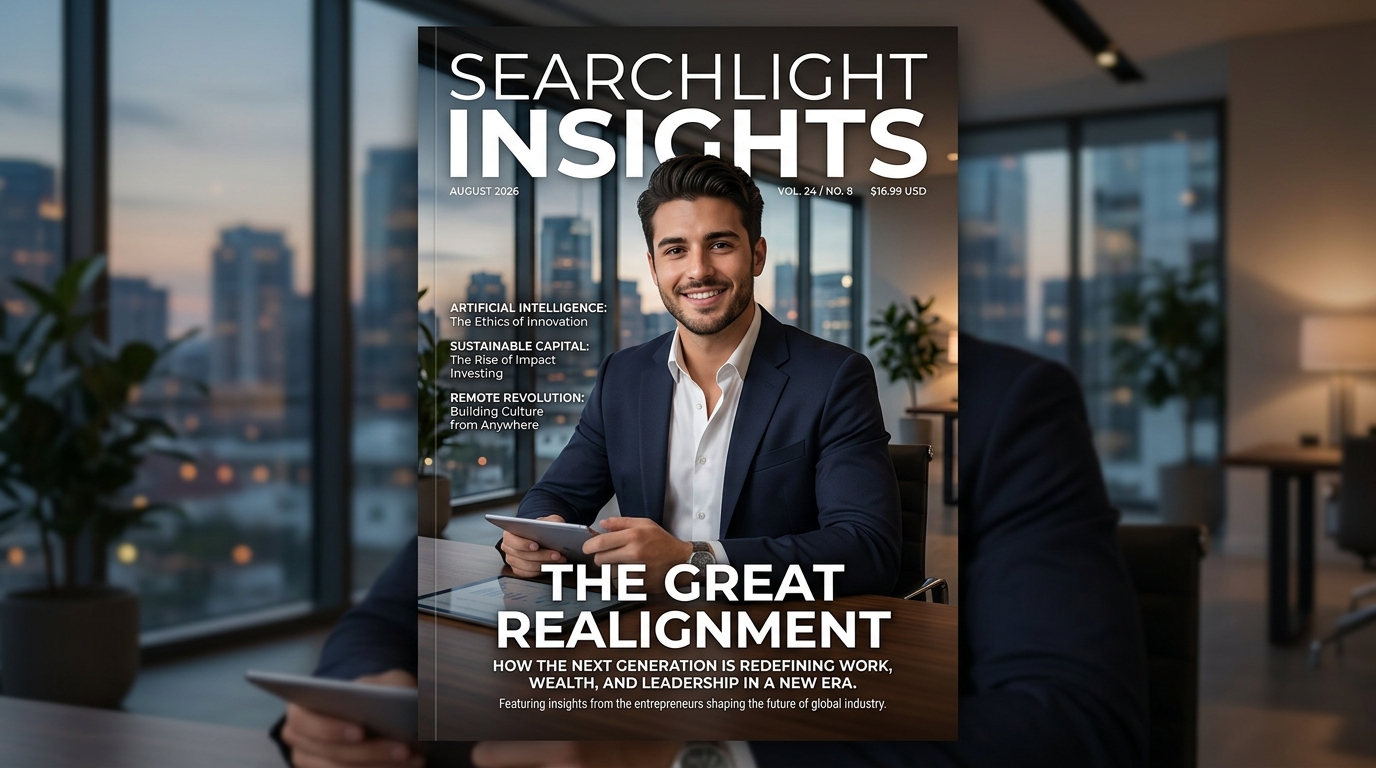
The creator economy is changing the future of work by making careers more personal, portable, and directly owned. It shows that individuals can build opportunity through audiences, reputation, intellectual property, and trust rather than depending entirely on location, hierarchy, or a single employer. We call the larger cultural shift behind this change The Great Realignment.
Sources: U.S. Bureau of Labor Statistics, June 2026 telework table; IAB 2025 Creator Economy Ad Spend & Strategy Report; World Economic Forum Future of Jobs Report 2025.
Success used to arrive with instructions
For most of modern working life, success came preassembled. Education led to employment. Employment led to promotion. Promotion led to security. Security led, eventually, to the hope of enough freedom to enjoy what remained.
People differed in ambition, talent, and opportunity, but the underlying sequence was remarkably stable. The system did not merely organize work. It supplied the definition of a good life.
That definition has begun to loosen.
Millions of people are no longer asking only, “How do I advance?” They are asking, “Advance toward what?” They are examining the trade that every career quietly makes: income for time, status for presence, certainty for autonomy, achievement for whatever achievement requires them to surrender.
The pandemic accelerated a change already underway
COVID-19 did not create remote work, digital entrepreneurship, online education, independent publishing, or the creator economy. It forced each of them into the center of ordinary life at the same time.
At the height of the pandemic, a much larger share of paid work moved into homes. The emergency eventually receded, but the demonstration could not be unseen. Work did not always require the commute, the building, or the visible performance of being at work.
By June 2026, 33.7 million U.S. workers still teleworked or worked at home for pay. Gallup reports that hybrid work remains the dominant arrangement among remote-capable employees, while fully on-site work is the least preferred option across age groups. The durable lesson is not that everyone wants to stay home. It is that people want a meaningful voice in how work fits into life.
The creator economy became proof, not merely an industry
The creator economy is usually explained through platforms, advertising, smartphones, and lower production costs. Those conditions matter. They do not fully explain the intensity of the movement.
Creators offered visible evidence that a career could be authored rather than assigned. A teacher could become an educator with a global classroom. A physician could build a trusted public platform. An executive could turn expertise into a community, advisory practice, course, newsletter, or company. A person did not need to abandon professional identity to begin owning more of it.
The economic infrastructure grew around that behavior. IAB projected U.S. creator advertising spending would reach $37 billion in 2025, nearly four times the growth rate of the overall media industry. But the larger consequence cannot be measured only in advertising. Creators made a different relationship with work imaginable to everyone watching.
The Great Realignment
The Great Realignment is the shift from asking how to succeed inside inherited systems to asking whether those systems produce a life worth living. It does not reject ambition, employment, or income. It reorders them around agency, ownership, adaptability, relationships, presence, and peace.
Five parts of work are being realigned
| Inherited measure | Emerging measure | What changes |
|---|---|---|
| Income | Agency | Compensation remains essential, but people increasingly measure whether work gives them meaningful control over time, direction, and choices. |
| Promotion | Ownership | Advancement is no longer limited to moving upward inside one institution. It can mean owning an audience, product, reputation, process, or enterprise. |
| Job security | Adaptability | Security shifts from trusting one role to building skills, relationships, assets, and visibility that travel between roles. |
| Resume | Reputation | Claims about past experience are supplemented by public evidence of judgment, contribution, and expertise. |
| Work-life balance | Life-centered work | The goal moves beyond balancing two competing domains toward designing work that does not routinely damage the life it is meant to support. |
This is why “realignment” is a more accurate word than revolution. Most people are not rejecting work or institutions. They are changing the order of importance. They still want income, accomplishment, colleagues, and stability. They no longer assume those outcomes should automatically outrank everything else.
Flexibility is not the same as agency
Flexibility is often the first visible concession a system makes. Agency is the deeper change people are seeking.
| Flexibility | Agency |
|---|---|
| Working from home on approved days | Having a meaningful role in deciding where work is best performed |
| Choosing among established career tracks | Building a career architecture that can include employment, ownership, and independent work |
| Receiving permission to publish | Owning a direct channel to a market or community |
| Taking unlimited vacation in theory | Building systems that make time away possible in practice |
Agency does not mean having complete control. Nobody does. Markets change. Platforms change. Family responsibilities intervene. Health changes. The distinction is whether a person has enough ownership to respond intentionally rather than simply absorb every decision made elsewhere.
AI will accelerate the realignment
Artificial intelligence will automate tasks, alter roles, and change the economics of producing information. The World Economic Forum estimates that labor-market transformation will affect 22% of today’s jobs by 2030, with 170 million roles created and 92 million displaced.
That disruption will increase the value of adaptable professional identities. People will need more than a job title. They will need visible judgment, transferable skills, trusted relationships, and the ability to communicate what they uniquely understand.
For creators, AI will reduce the cost of research, editing, translation, design, analysis, and production. It will also fill the internet with competent material. When adequate content becomes abundant, the premium moves toward what machines cannot independently establish: earned trust, taste, lived experience, moral judgment, courage, and a point of view someone is willing to follow.
What we expect between 2026 and 2031
1. Personal reputation will become career infrastructure
More employees and professionals will build public bodies of work before they need them. A visible reputation will help attract jobs, clients, partnerships, capital, speaking opportunities, and resilience during transitions.
Watch for: employers valuing public expertise and audience trust alongside conventional credentials.2. The Media Company Mindset will spread beyond full-time creators
Successful creators already think in terms of editorial direction, distribution, audience development, intellectual property, revenue, and operations. Those practices will increasingly be adopted by consultants, executives, educators, physicians, founders, and conventional organizations.
Watch for: small professional teams producing media around one person’s expertise.3. Hybrid careers will become ordinary
Employment, consulting, ownership, teaching, publishing, and investing will coexist within the same career. The central question will not be whether someone is an employee or entrepreneur, but which mix of structures best serves the work and life at that stage.
4. Owned access will become more valuable than rented reach
Platform audiences will remain powerful, but creators will invest more heavily in email, communities, memberships, customer relationships, products, and intellectual property they can carry across platforms.
5. Creator coaching will mature from motivation to decision architecture
As creators become more sophisticated businesses, they will need help with positioning, pricing, contracts, revenue design, operating choices, and the protection of independence. The value will be better decisions, not permanent reliance.
6. Peace will become a serious business metric
Creators and independent professionals will begin measuring whether the business can operate without consuming the autonomy it was designed to create. Revenue that destroys health, presence, or identity will increasingly be recognized as poorly designed revenue.
The creator economy can still reproduce the system it challenged
Independence is not automatically peaceful. A creator can leave an office and become more controlled by work than before. The boss may be replaced by analytics. The commute may be replaced by an always-open production schedule. The annual review may be replaced by hourly public judgment.
This is the central risk of the next phase. The creator economy can preserve the address while losing the freedom. It can turn autonomy into permanent availability and ownership into a business that cannot function without the owner’s constant presence.
That is why sustainable creator businesses require more than revenue. They require boundaries, operating systems, diversified income, selective opportunities, and a definition of success that existed before the algorithm supplied one.
The future of work is becoming more personal
The next generation will not necessarily abandon employers, offices, or institutions. It will expect a more thoughtful relationship with each of them.
People will increasingly ask whether work builds skills that remain theirs, relationships they value, assets they can carry, and a life they recognize. They will compare income against agency. They will compare prestige against presence. They will compare opportunity against what the opportunity requires them to become.
Frequently asked questions
How is the creator economy changing the future of work?
The creator economy demonstrates that individuals can build careers around direct audience relationships, portable reputations, diversified income, and greater control over time and work design. Its influence is spreading beyond professional creators into consulting, education, entrepreneurship, and conventional employment.
What is the Great Realignment?
The Great Realignment is Searchlight Social’s term for the shift from succeeding inside inherited career systems toward evaluating and redesigning those systems around agency, ownership, adaptability, and the life a person wants to protect.
Did the pandemic create the creator economy?
No. The creator economy existed before COVID-19. The pandemic accelerated adoption by expanding digital consumption, proving that many jobs could be performed away from offices, and prompting millions of people to reconsider what work should require from them.
Will everyone become a creator?
No. Creator practices will spread more widely than the occupation itself. More professionals will publish, develop direct audiences, own their reputations, use AI to increase leverage, and create income or opportunity outside a single employer.
How will AI affect the creator economy through 2031?
AI will lower production costs and increase the volume of competent content. That will make human judgment, taste, trust, lived experience, and recognizable points of view more valuable. Creators will use AI as infrastructure while competing through meaning and credibility.
What should creators build for the next five years?
Creators should build portable trust, owned audience access, durable intellectual property, multiple revenue paths, a clear point of view, and operating systems that protect the life their independence was supposed to create.
Season 1: The Evolution of Work
How are creators changing what work can become? Read the complete season in any order.
Build work that belongs to you
Searchlight Social helps creators turn attention into durable businesses through coaching, strategic representation, commercial systems, and decisions designed to protect long-term independence.
Explore Creator CoachingDiscover more from SearchLight Social
Subscribe to get the latest posts sent to your email.