 Skip to content

Creator Strategy / Brand Deals
Should You Put Your Rates in Your Media Kit? An Agency View
The advice splits cleanly down the middle and both sides are confident. The answer depends on one thing about your business.
You should put rates in your media kit if inbound volume is costing you more time than the deals are worth, and leave them out if your deals vary enough that a single number would misprice most of them. Published rates filter the inbox and cap the ceiling. Withheld rates protect the ceiling and cost you hours. Neither is universally right, and anyone who tells you otherwise is describing their own business rather than yours.
Searchlight Social builds media kits and rate cards with creators across Los Angeles, New York, and Chicago.
We are a coaching-first, non-exclusive influencer management agency based in Simi Valley, California. Verify us on Google Business Profile.
What a published rate really does
Two things at once, and they pull in opposite directions.
It filters. Brands with no budget see the number and do not write, which removes conversations that were never going to convert. For a creator receiving fifteen inbound messages a week, most of them unserious, that filter is worth real hours.
It also caps. A brand that would have paid four thousand for a campaign they had not scoped yet reads three thousand on your kit and offers three thousand. You will never know that happened, which is what makes this cost invisible and easy to dismiss.
The Anchor Problem
The trade has a shape worth naming. The Anchor Problem is the way a published rate becomes the highest number in a negotiation rather than the starting point, because the brand opens at or below the figure you supplied and every subsequent move is downward from a ceiling you set yourself.
Nobody negotiates upward from a published number. The kit said three thousand, so three thousand is the maximum outcome of that conversation, and a brand with a larger budget quietly keeps the difference.
Which side of this you are on
The Publish or Withhold Test
Four questions that settle it for your business specifically.
How much unqualified inbound do you get?
If most weeks bring several enquiries that die on budget, a published rate is saving you hours. If you receive two serious approaches a month, it is solving a problem you do not have.
Publish if: volume is the problem.
How much do your deals vary?
If usage, exclusivity and deliverables differ substantially between campaigns, one number will misprice most of them. A creator whose work is truly standardised has no such problem.
Withhold if: your deals differ more than they resemble each other.
Are you confident quoting live?
A published rate removes the moment where a creator has to name a number under pressure. For creators who find that moment difficult and undercharge because of it, publishing is a real protection.
Publish if: you have talked yourself down more than once.
Is your rate rising quickly?
A number in a circulating PDF gets quoted back at you months later. Creators whose value is climbing find their own kit used as evidence against the new rate.
Withhold if: your numbers have moved materially in the last six months.
The version that works for most creators
A starting figure rather than a rate card, phrased as a floor.
“Partnerships typically start at $2,500 for a single video with thirty days of organic usage.” That sentence filters out anyone below the line, states a minimum rather than a maximum, and leaves every larger scope open. It also signals a professional who has done this before, which is worth something on its own.
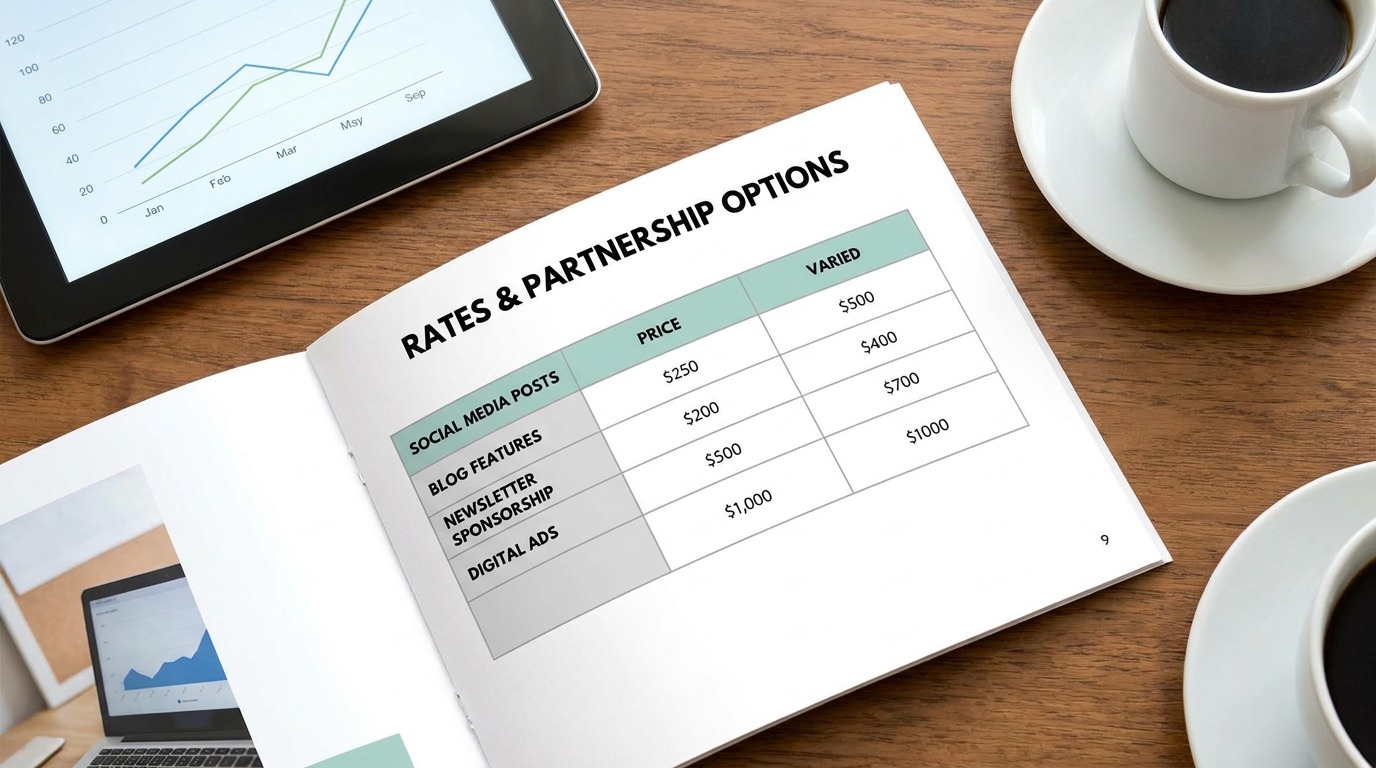
What it avoids is the full grid. A table listing every deliverable at a fixed price reads as a menu, and menus get ordered from rather than negotiated around. The moment a brand can assemble a campaign from your published components, you have given up the part of the conversation where scope and price are decided together.
| Approach | Filters inbox | Protects ceiling | Best for |
|---|---|---|---|
| Full rate card | Strongly | No | High volume, standard deals |
| Starting-at figure | Well | Mostly | Most working creators |
| No rate at all | Not at all | Fully | Low volume, variable scope |
What belongs in the kit instead of a price
- Median views over the last thirty days. The single most useful number you can give a brand, and far more persuasive than follower count.
- Audience composition. Age, location and anything that demonstrates alignment with the kind of customer that brand wants.
- Two or three examples of past branded work. With what happened, not just that it existed.
- The recurring element in your content. Where a product would sit, described plainly, so a brand manager can picture the placement before they ask.
- What a partnership includes as standard. Deliverables, usage window and revision rounds, stated without prices. It frames the scope while leaving the number open.
The Scope-First Reply
Whichever way you go, the reply matters more than the document. The Scope-First Reply is the practice of answering a rate enquiry with questions about deliverables, usage and timing before naming any figure, so that the number arrives attached to a defined scope rather than as an abstract price.
It works because a rate without a scope is meaningless to both parties, and asking makes you sound like someone who has run campaigns rather than someone guessing. It also buys you the information you need to price the deal properly, which is the whole point.
What to say when a brand asks for your rate
Answer with a range attached to a scope, and ask one question.
Something close to: “For a single video with thirty days of organic usage, partnerships typically start at $2,500. If you need paid usage or exclusivity that changes the number. What deliverables are you working with, and is there a budget range you are aiming at?”
You have named a floor, flagged that scope moves it, and asked for their number. A brand with a budget will usually share it, and a brand without one will go quiet, which is the filter you wanted from the media kit without the ceiling that comes with it.
Questions creators ask about media kit rates
Should you put your rates in your media kit?
Publish them when unqualified inbound is costing you more time than it is worth, and withhold them when your deals vary enough that one number would misprice most of them. Published rates filter the inbox effectively but become a ceiling, since brands open at or below any figure you supply.
Does listing rates scare brands away?
It removes brands whose budget is below the number, which is usually the intended effect. The real cost is different: a brand willing to pay more anchors to your published figure and offers that instead, and you never learn it happened. That invisible loss is why many creators prefer a starting-at figure.
What is better than a full rate card?
A single starting-at figure phrased as a floor, such as partnerships typically beginning at a stated amount for one video with thirty days of organic usage. It filters serious enquiries, signals professionalism, and leaves larger scopes open rather than presenting a menu a brand can order from.
What should a media kit include instead of prices?
Median views over thirty days, audience composition, two or three past branded examples with outcomes, a description of the recurring element in your content where a product would sit, and what a standard partnership includes in deliverables, usage and revisions.
How do you answer when a brand asks your rate directly?
Give a floor tied to a defined scope, note that usage or exclusivity changes it, then ask what deliverables they need and what range they are working to. Brands with budget usually answer, and brands without one go quiet, which achieves the filtering a published rate card does without capping the deal.
Build the kit that opens the right conversations
Searchlight Social builds media kits and rate strategy with creators, including where to put a number and where to leave one out.
Searchlight Social
2880 Cochran St #1109, Simi Valley, CA 93065
+1 (805) 850-3103 · info@searchlightsocial.com
Serving Los Angeles, New York, and Chicago · Google Business Profile · Contact
Discover more from SearchLight Social
Subscribe to get the latest posts sent to your email.