 Skip to content
Creator Strategy / Content Psychology
Get ready with me isn’t about the makeup.
Everyone thinks the format is a product demo with a friendly face attached. It isn’t. The real reason it exploded is hiding in plain sight, and it has almost nothing to do with the product.
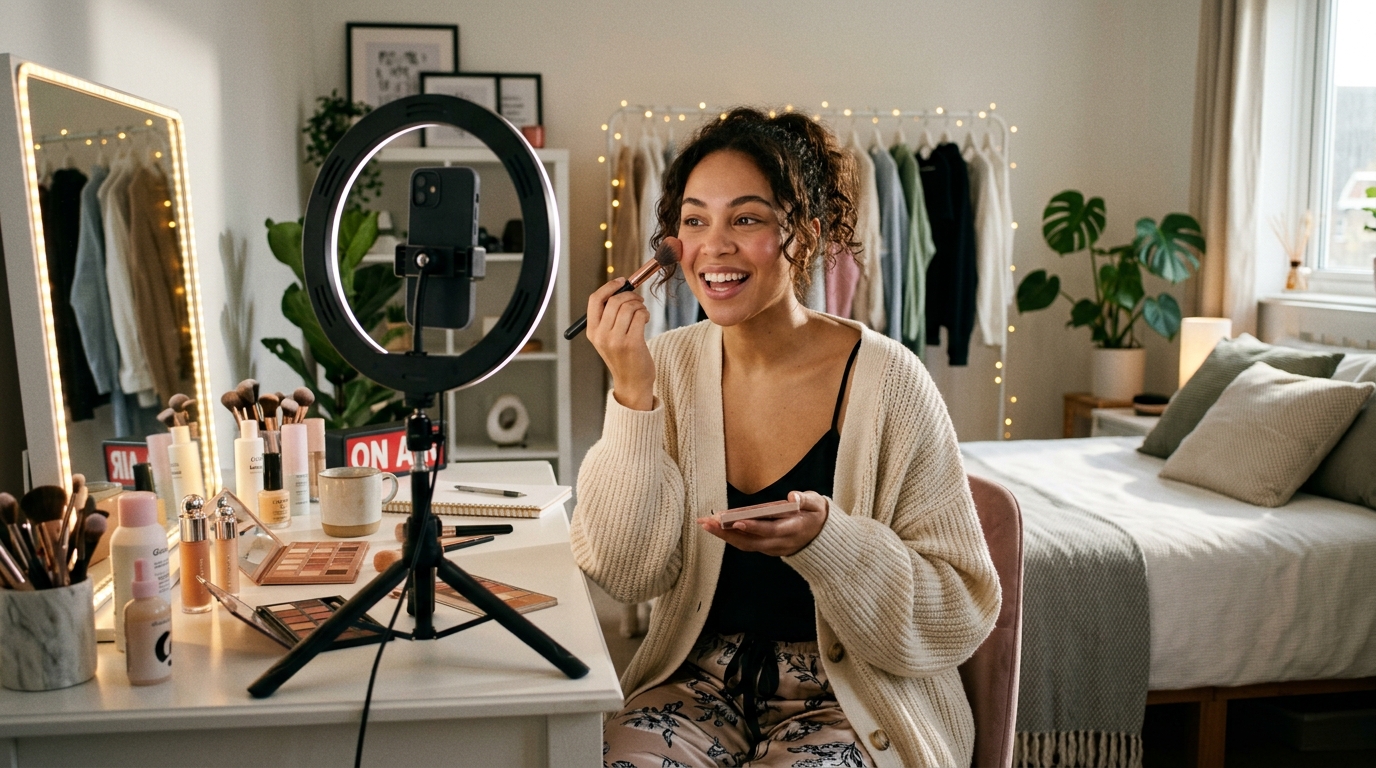
Why does the get ready with me format work so well? Not because it shows you a product. It works because the creator invites you into a private, intimate part of their morning. Being let into someone’s personal ritual is one of the oldest ways humans build closeness. That invitation, not the makeup, is what makes you feel connected to both the creator and whatever they happen to be using. GRWM is a relationship disguised as a tutorial, and understanding that difference is the whole game.
Get ready with me exploded onto the scene through beauty creators years ago, and it has never really left. Ask most people why it works and you will hear some version of the same answer. It lets the audience see the product in action, from a first-person view, demonstrated by someone they already like. A live tutorial with a trusted face. Useful, sure. But that explanation misses the thing that actually matters.
Because if GRWM were really just a product demo, a straight tutorial would work just as well, and it does not. Something else is happening. The format is doing work at a level most creators never name, and once you see it, you cannot watch a GRWM the same way again.
What’s really happening when you watch someone get ready
Think about what getting ready in the morning actually is. It is private. It is unguarded. It is one of the few parts of the day most people never show anyone outside their closest circle. So when a creator films it and hands it to you, they are not mainly showing you a product. They are inviting you into an intimate, ordinarily hidden part of their life.
That invitation is the engine, and there is deep psychology under it. Researchers call it self-disclosure, and it is one of the most studied mechanisms in human relationships. The research is consistent: when one person reveals something personal, the other feels closer to them, and trust grows. Social Penetration Theory describes intimacy developing as people peel back layers of themselves, like an onion, moving from surface small talk to genuine private access.
A get ready with me is a layer being peeled back. The creator is letting you past the small talk and into the bathroom mirror. Your brain responds the way it responds to any intimate disclosure, with a feeling of closeness, whether the person sharing is your friend or a creator you have never met.
-
The Intimacy Invitation
Why the format actually works
The real engine of get ready with me. By inviting the audience into a private, normally hidden part of the morning, the creator triggers the self-disclosure response that builds closeness between people. The feeling of connection comes from the invitation into the intimate moment, not from the product being shown. The makeup is the setting. The disclosure is the substance.
-
The Backstage Pass
Why it deepens the bond
The sense of privileged access that turns a viewer into someone who feels they personally know the creator. This is rooted in parasocial relationship research, the study of the one-sided bonds audiences form with media figures. Being let behind the scenes of a real life deepens that bond. The viewer stops feeling like a spectator and starts feeling like an insider, a friend who gets to be there.
The audience isn’t learning to apply a product. They’re being let into a private moment by someone they already like. The product just happens to be in the room.
Why this makes people feel connected to the product, too
Here is where it pays off, and where most creators get the cause and effect backwards. They think the audience connects to the product, and the creator is the delivery mechanism. It is the reverse. The audience connects to the creator through the intimacy of the invitation, and that connection then transfers to whatever the creator is using.
This is the parasocial relationship doing its work. The research on parasocial bonds, a concept first named in 1956, shows that audiences feel real friendship and familiarity with media figures they have never met. When that figure invites you into their morning, the bond strengthens, and people buy from people they feel close to. The product rides on the relationship. A tutorial sells information. A GRWM sells through closeness.
This is what coaching actually is
I am walking through this one format in detail to make a larger point about how content really works. So much of content creation is grounded in human psychology, and yet we almost never stop to think about it that way. We talk about hooks, retention, and trends, and we skip the question underneath all of them: what human need is this piece of content actually meeting?
That question is the real job of a great coach. Not to hand a creator a trend to copy, but to look at a piece of content and deconstruct it. The job is to find its mental and emotional format, the psychological thing it is doing beneath the surface. Once you can name the mechanism, you can work with the creator to optimize the content around it. That makes it more consumable, more resonant, and more repeatable, on purpose rather than by luck.
It is the difference between a creator whose content works and a creator who knows why it works. The first is at the mercy of the next trend. The second can build the next format themselves, because they understand the human being on the other side of the screen.
Most content that works is solving a human problem in disguise. The coach’s job is to name the disguise.
Frequently asked questions
Why does the get ready with me format work so well?
Because it is not really about the product. The format invites the audience into a private, intimate part of the creator’s morning, and being let into a personal moment is one of the oldest ways humans build closeness. Psychologists call this self-disclosure: when someone reveals a private part of themselves, the other person feels trust and connection. GRWM works because of the invitation, not the makeup.
What is the psychology behind GRWM videos?
Two mechanisms. First, self-disclosure: sharing a private routine triggers the closeness response that intimate sharing creates between people. Second, the parasocial relationship: by letting viewers behind the scenes of a real life, the creator deepens the one-sided bond where the audience feels they personally know the creator. Together they make the viewer feel connected to both the person and anything that person uses.
Is GRWM just a product demonstration?
On the surface it looks like one, and most people read it that way. But the product demo is the cover story. The real work is relational. The audience is not primarily learning how to apply a product, they are being invited into an intimate ritual with someone they already like. That is why a GRWM can sell a product far better than a straight tutorial of the same product ever could.
How can creators use psychology to make better content?
By understanding what their content is actually doing beneath the surface. Most formats that work do so for a human reason, like the need for connection, belonging, or trust. A good coach can deconstruct a piece of content, name the psychological mechanism driving it, and then help the creator lean into that mechanism on purpose rather than by accident. That is the difference between content that performs and content that performs and nobody knows why.
Does GRWM help sell products better than tutorials?
Often, yes, because the connection does the selling. When an audience feels invited into a creator’s private routine, the trust that builds transfers to whatever the creator is using. A tutorial explains a product. A GRWM makes the viewer feel close to the person using it, and people buy from people they feel they know. The format sells through relationship rather than through information.
Discover more from SearchLight Social
Subscribe to get the latest posts sent to your email.