 Skip to content
Creator Strategy / Building The Business
You don’t have a community. You have an audience.
The word gets thrown at every follower count on the internet. But community is one of the oldest, most demanding things humans build, and most creators are describing something far smaller when they use it.
How do you build a creator community instead of just an audience? You build a place where members carry the social weight themselves. They talk to each other, agree and disagree, and keep the conversation alive even when you step back. You introduce topics without moderating every exchange, and you invite people into the success of the content itself. An audience watches you. A community lives whether or not you are in the room. The difference is built on purpose, through content strategy, and almost no creator does it by accident.
Community might be the most overused word in the creator economy. Every follower count gets called one. Every comment section, every subscriber list, every group chat. We have stretched the word so thin that it barely means anything anymore. And that is a problem, because community is actually one of the oldest and most powerful things human beings know how to build.
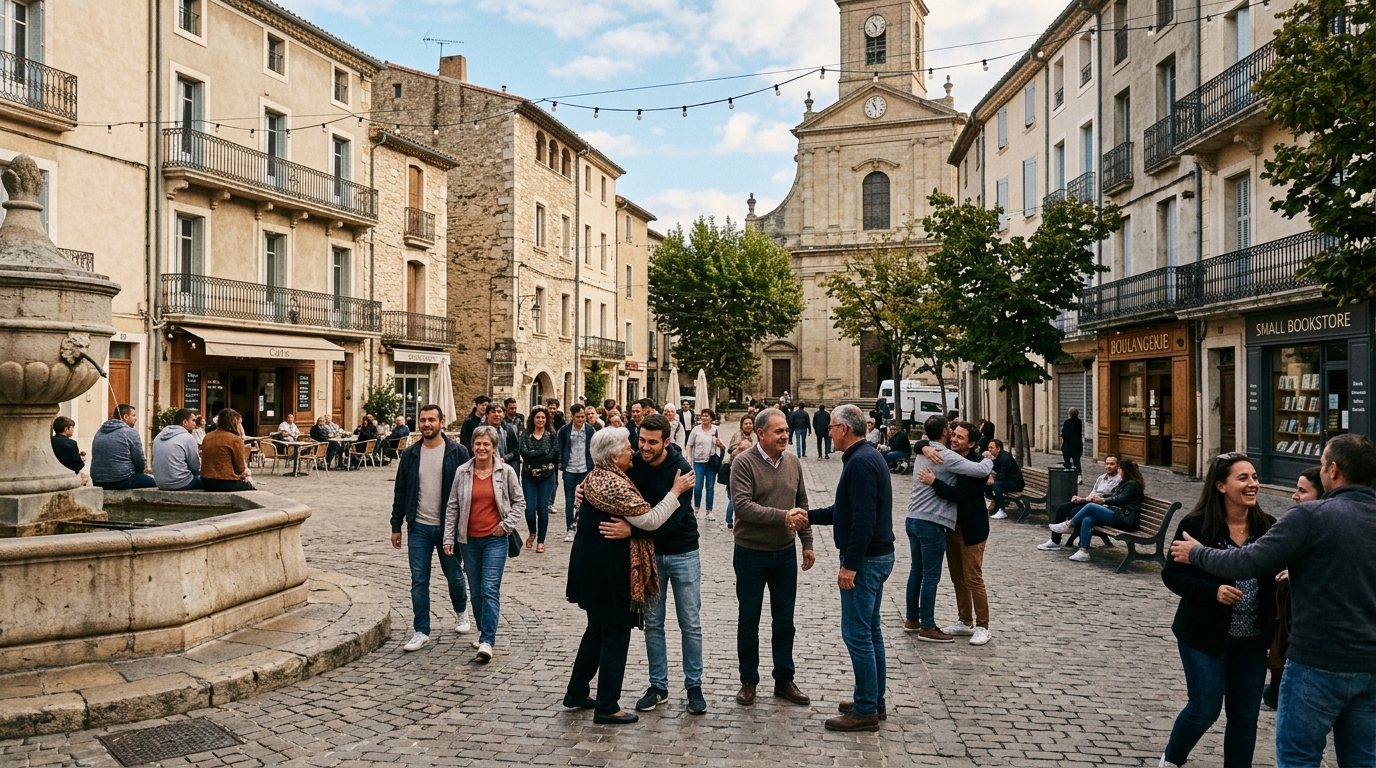
Go back far enough and community is the original technology. Church communities. Sports communities. Civic communities. Before there was formal government, there were people gathering in a town square, someone standing up to speak, others arguing back. Local government itself grew out of that, neighbors coming together, disagreeing in public, and deciding things as a group. Community is how humans have organized belonging for as long as there have been humans.
So when a creator says they have a community of two hundred thousand, I always want to ask one question. Does anything happen there without you? Because that, more than size, is the line between the real thing and the word we borrow to describe something smaller.
What a real community actually requires
Psychologists have studied this, and the most enduring framework comes from David McMillan and David Chavis. Their 1986 theory of “sense of community” identifies four elements: membership, influence, fulfillment of needs, and shared emotional connection. Look closely and you notice something. Only one of them is about the relationship between a member and the group. The rest are about members and each other.
The element that matters most for creators is influence, and it runs in both directions. Members shape the group, and the group shapes them. That reciprocity is the thing missing from almost every “community” built on a feed, where influence only flows one way, from the creator outward, and the audience absorbs it. A real community is not a broadcast. It is a conversation among people who matter to each other.
This is also why the historical version felt so heavy and the digital version often feels so thin. As Robert Putnam documented in his work on America’s declining social capital, the civic communities of the past, the leagues, the clubs, the local associations, were built on people showing up for each other in person, over years. They had weight. The question for creators is whether anything online can carry that same weight, and the answer is yes, but only if you build for it.
Two ideas separate a real community from an audience wearing the word. I name them because once you see them, you cannot unsee which one you actually have.
-
The Weight-Bearing Community
The structural test
A community whose members can carry its social weight themselves. They agree, disagree, and debate with each other, and the conversation keeps going without you moderating every exchange. You introduce topics, the way someone stands up in a town square, but you do not have to hold up every interaction that follows. If every thread dies the moment you stop replying, you do not have a weight-bearing community. You have an audience taking turns with the host.
-
The Hometown Test
The emotional test
Think about leaving a hometown. You go off to college, or take a job somewhere else, and you leave. But there is a pride and a nostalgia that stays with you, a pull to come back, a sense that part of you belongs there. Ask whether your community passes that test. If a member drifted away, would they feel that ache to return? If the honest answer is no, the group is an audience, and we should rethink whether “community” is really the word for what you have built.
An audience watches you. A community lives whether or not you are in the room. Most creators have built the first and named it the second.
Why this is worth the harder work
You could reasonably ask why it matters. An audience can be huge and profitable. Here is why I push creators toward the harder thing: attention is rented, and community is owned. An audience follows the algorithm, the trend, the next louder voice. A community follows each other, and that loyalty does not evaporate when the feed changes or a competitor posts something flashier.
That depth is also exactly what serious brands are learning to look for. A spike of views is easy to buy. A group of people who truly belong somewhere, who show up for each other and for the creator at the center, is rare and far more durable. It is the difference between renting attention for a campaign and partnering with a place people actually care about.
How to actually build one
So how do you do it? The honest answer is that it does not happen organically, which is why most creators never get there. It takes a deliberate, purposeful content strategy and a standing invitation for members to be part of the success of the content. Here is the work, in the order I coach it.
- Introduce topics, do not moderate every exchange. Put ideas into the room the way a town square invites debate, then let members agree and disagree with each other. Set the boundaries of respect, then trust people to carry the conversation without you refereeing every reply.
- Invite members into the success of the content. Give people a real role in what gets made: featured questions, member spotlights, ideas you build on publicly, decisions you put to the group. Personal investment is what turns a viewer into a member who has skin in the game.
- Build shared symbols and rituals. Inside jokes, recurring formats, names, traditions. These are the common language that tells members they belong here and others do not. Shared symbols are how a group recognizes itself as a group.
- Create a place worth returning to. Give the community continuity, history, and a sense of being somewhere specific. The goal is the pride and nostalgia of a hometown, so that even members who drift away feel the pull to come back.
None of this is fast, and none of it is automatic. It is the opposite of the one-way broadcast most platforms reward. But it is the only path to the thing the word community actually promises, and if that bar feels too high, the useful move is not to lower the bar. It is to be honest that what you have, for now, is an audience, and to start building from there.
If “community” is too high a hurdle for what you’ve built, don’t lower the word. Build up to it.
Frequently asked questions
What is the difference between an audience and a community?
An audience watches the creator. A community interacts with one another. In an audience, every conversation runs through the creator, and attention stops when the creator stops posting. In a community, members agree, disagree, and debate among themselves, and the group keeps its life even when the creator steps back. The simplest test is whether anything social survives without you in the room.
How do you build a creator community instead of just an audience?
Through deliberate content strategy, not luck. Introduce topics that invite real discussion rather than just applause, let members talk to each other instead of routing everything through you, and invite people into the success of the content with roles, spotlights, and decisions. Add shared symbols and rituals so the group recognizes itself. Most creators never do this on purpose, which is why most have an audience rather than a community.
Why is community so important for creators?
Because community is durable in a way that attention is not. A community gives members belonging, influence, and a sense of place, so they return out of loyalty rather than algorithm. That depth is harder for competitors and platform changes to erode, and it is exactly what brands look for when they want engagement that lasts rather than a spike of views.
Should creators moderate every conversation in their community?
No. A healthy community introduces topics but does not police every exchange. Like a town square, it lets members debate and disagree within clear boundaries of respect. Over-moderating turns a community back into an audience performing for the host. The creator’s job is to set the boundaries and the culture, then trust members to carry the conversation.
What if my following is not really a community?
Then it is more honest to call it an audience, and that is not a failure. The danger is using the word community for something that is not one, because it hides the work still to be done. If members would not feel pride or want to return after leaving, the group has not become a community yet, and naming that clearly is the first step to building one.
Discover more from SearchLight Social
Subscribe to get the latest posts sent to your email.