 Skip to content


Before a word is spoken, before a logo appears, before a price tag is seen — smell arrives first. It bypasses the rational mind entirely, threading directly into the limbic system, the ancient part of the brain that governs memory, emotion, and desire. This is not a metaphor. It is neuroanatomy. And it is the most disruptive, most intimate, most criminally underestimated force in modern marketing.
We are living through a scent revolution. Fragrance dollar sales surged 12% in the first half of 2024 alone. The global scent marketing market, valued at $3.6 billion in 2024, is forecast to reach $6.4 billion by 2033. A new generation — Gen Z, the most identity-conscious cohort in consumer history — has decided that how you smell is as telling as what you wear. Seventy percent of them believe their scent reflects who they are. Sixty percent say they will spend significantly to smell exactly right.
And yet most brands still treat smell as an afterthought. A candle in the lobby. A spritz at the perfume counter. This article is an argument — and a roadmap — for something far more ambitious: scent as a foundational pillar of brand identity, executed through the most trusted messengers of our time: fragrance influencers.
Scent Marketing: Memory Lives in the Nose, Not the Eyes
The olfactory nerve is the only sense with a direct anatomical connection to the hippocampus and amygdala — the brain’s memory and emotion centres. Every other sense is filtered through the thalamus before reaching these regions. Smell is not. It arrives unmediated, which is why a single inhale can transport you to a childhood kitchen, a lost lover’s shoulder, or a hotel room in a city you visited once and never forgot.

A study by the Sense of Smell Institute found that while visual recall of images drops to approximately 50% after just three months, humans recall smells with 65% accuracy after an entire year. In the short term, we remember 35% of what we smell — versus just 5% of what we see. For a brand investing heavily in visual identity while ignoring scent, this is a staggering missed opportunity.
Humans can discriminate up to one trillion different odours — a figure that dwarfs our previously understood capacity of around 10,000. This extraordinary sensitivity influences behaviour, emotional states, mate choice, and social bonding. It is the most intimate sense we possess. And it is the one that brands have barely begun to exploit.
“We remember 35% of what we smell. We remember just 5% of what we see. Visual branding is table stakes. Olfactory branding is the moat.”
The Numbers: A $6.4 Billion Tide Is Already Rising

The scent marketing industry is no longer a curiosity for luxury hotel lobbies and casino floors. It has become a mainstream strategic discipline, expanding at a compound annual growth rate of 6.6% through 2033. Retail is its core domain — but the fastest-growing applications are in hospitality, automotive, healthcare, and digital-to-physical brand extensions.
The broader fragrance market tells an equally compelling story. Valued at approximately $52.4 billion in 2025, it is being turbocharged by two forces: the personalisation revolution and the social media discovery economy. Luxury fragrance sales grew 15% in 2024, with consumers turning sharply toward artisanal and niche houses over mass-market anonymity.
Meanwhile, fragrance has become Amazon’s fastest-growing beauty category in the US. Neiman Marcus launched a fragrance subscription partnership. Claire’s leaned into perfume to chase Gen Alpha’s approval. Every major retail segment has drawn the same conclusion: scent is not a category. It is a growth lever. Even social media has come to realize this, with global celebrity scent influencers like Jeremy Fragrance with over 10 million followers.
A few headline numbers that every brand strategist should have memorised:
- 84% of consumers are more likely to remember a brand that has a distinctive signature scent
- 100× — consumers are 100 times more likely to remember what they smell versus what they see, hear, or touch (Mood Media)
- 23% uplift in consumer spending from ambient scent environments
- 40% improvement in consumer mood after exposure to pleasant scent (IFF Research)
- 15 minutes longer — the average increase in shopper dwell time in scented retail environments
The Cultural Shift: From Fragrance to Identity — The Smellmaxxing Generation
Something seismic happened on TikTok. A hashtag — #PerfumeTok — became a community. That community became a culture. And that culture became a purchasing juggernaut that no brand strategist could have predicted and no incumbent fragrance house fully anticipated.
Gen Z has adopted scent not as a finishing touch but as a cornerstone of personal identity — as fundamental as their aesthetic, their playlist, or their skincare routine. The concept of “smellmaxxing” — optimising one’s olfactory presentation with the same rigour applied to grooming or fashion — has gone genuinely viral, producing creators, communities, and commerce at a scale traditional fragrance marketing could never have engineered.
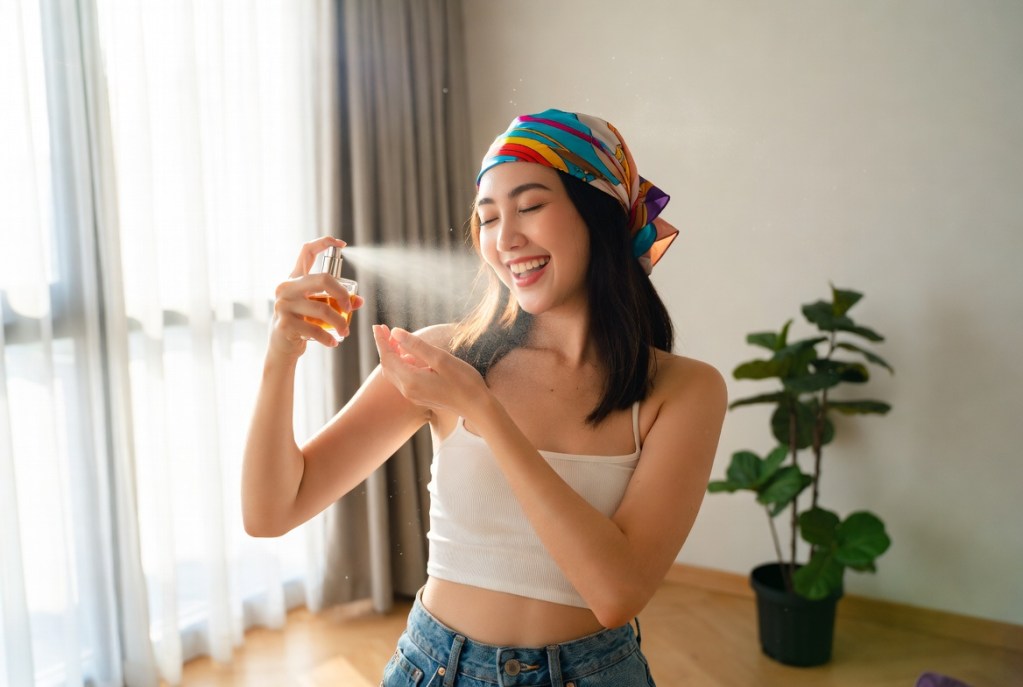
The data from TikTok alone is extraordinary: 45% of fragrance purchases influenced by social media happen on TikTok. A single viral video can sell out a fragrance line overnight. US fragrance sales jumped 14% in 2024, and much of that growth traces directly to peer-to-peer recommendation through influencer content.
One viral creator describing how a scent makes them feel can do what a $10 million television campaign cannot: make someone want to smell it.
“You can list notes, talk about craftsmanship, and shoot beautiful visuals — but none of that replaces a real person explaining how a scent actually fits into their life. Influencers give fragrance context. That nuance doesn’t come from ads.”
— Searchlight SocialThe Influencer Ecosystem: Four Creator Archetypes Every Brand Needs to Understand
The craft of the fragrance influencer is genuinely extraordinary. They are asked to convey smell through pixels — and the best of them have developed a synaesthetic vocabulary that makes you smell through their description. They describe how a fragrance sits on skin at the end of a long day, who notices it, what memory it unlocks, which season it belongs to. This is not reviewing. It is storytelling.

The influencer ecosystem has matured into four distinct archetypes, each serving a different strategic purpose:
1. The TikTok Tastemaker
Creators like TheCologneBoy (Jatin Arora) and Evan Hall — with over 1 million followers and 38 million likes — drive viral discovery at scale. Their quick, styled reviews make fragrance feel urgent and accessible. Their influence is immediate, democratic, and measurable. When Evan Hall’s “Smell Great on a Budget” series goes viral, clone fragrances sell out within hours.
2. The YouTube Educator
Long-form creators like Olivia Olfactory break down perfume with academic rigour — explaining notes, sillage, longevity, and layering in ways that build genuine connoisseurship. Their audiences are committed collectors. Their endorsement is a seal of quality that outlasts any trending sound.
3. The Instagram Aesthete
Creators like Erin Nicole — specialising in Chanel, Dior, and Maison Francis Kurkdjian — build aspirational worlds around fragrance. Their editorial-quality content speaks to the luxury consumer who buys with her eyes as much as her nose. The beauty is in the bottle. The story is in the feed.
4. The Founder-Influencer
Creators who launch their own lines — Funmi Monet with Exalté (Turkish rose and jasmine, selected for Sephora’s Accelerate programme 2025), Kilian Hennessy with By Kilian — collapse the distance between influence and product entirely. Their authority is unimpeachable because their stake is total.
What unifies the best performers across all four archetypes is what the team at Searchlight Social identifies as the defining quality of the space: the ability to make a fragrance feel chosen rather than pushed. That distinction is the entire game.
Building a Scent Strategy That Actually Works
Most brands approach scent marketing reactively — launching a candle line, commissioning an in-store diffusion, partnering with a fragrance house to put their name on a bottle. This is not a scent strategy. A genuine scent strategy is architecturally integrated into brand identity, customer experience, and communications.
The science is more precise than most marketers realise. Research from Washington State University found that simple scents — single-note citrus, clean pine — outperform complex blends in driving purchase behaviour, because they demand less cognitive processing and free the brain to conjure vivid associations. Lavender, basil, cinnamon and citrus are relaxing and purchase-conducive. Peppermint and rosemary are invigorating. Ginger, cardamom and chocolate stir warmth and desire. The right scent for a fitness brand is not the right scent for a jewellery boutique. This is craft, not guesswork.
About 73% of global consumers now consider mental wellness benefits when buying fragrances — leading to a surge in “functional scents” engineered to reduce stress, sharpen focus, or elevate mood. This wellness dimension opens a powerful narrative lane for brands: scent not as indulgence, but as self-care infrastructure.
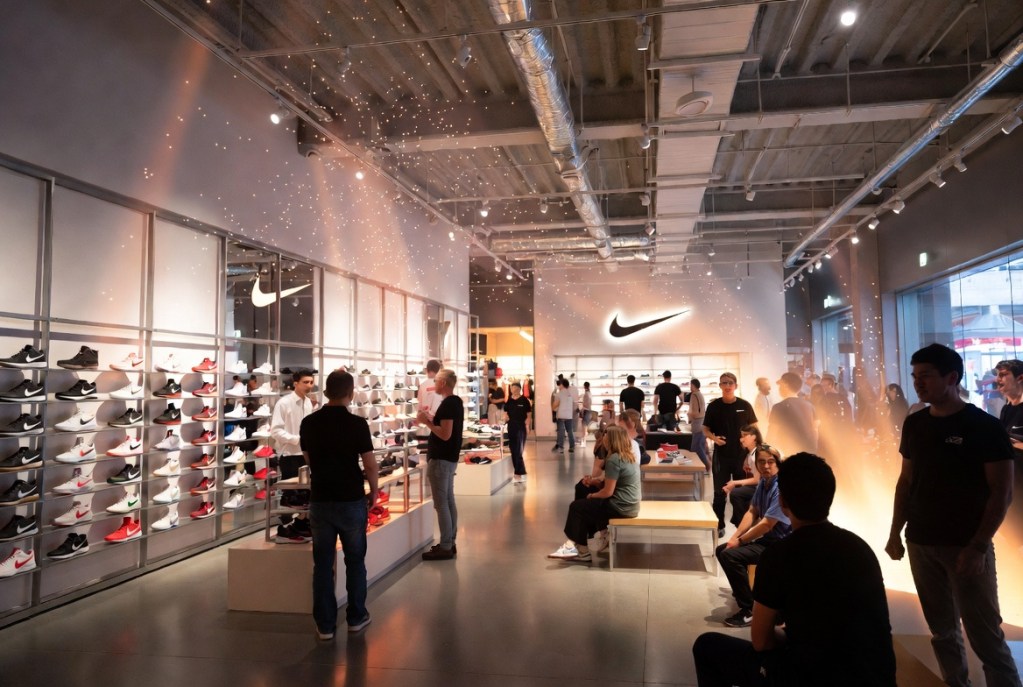
Real-world results speak for themselves:
- Nike found that scent marketing positively influenced the desirability of shoes for 84% of subjects — and those customers were willing to pay 10–20% more in the scented environment
- Samsung shoppers underestimated their dwell time by 26% and visited three times more product categories when exposed to themed fragrances
- Hospitality brands with signature scents have seen a 23% rise in repeat visits
The frontier lies ahead: AI-driven personalisation of ambient scent, scent-infused packaging, and “fragrance journey” store mapping. Brands that invest now in olfactory identity will own a positioning that competitors cannot simply copy. A logo can be redesigned. A scent signature, built over years into customer memory, cannot.
Why Every Fragrance Brand Can No Longer Ignore Influencers
The numbers are no longer deniable. Forty-five percent of fragrance purchases influenced by social media originate on TikTok. US fragrance sales increased 14% in 2024, with influencer-driven discovery as the primary engine. And 72% of consumers globally report that very few brands feel genuinely different — which means in a saturated market, the brands that stand out are those whose stories are told by trusted human voices.
Executing this well is not simple. It demands knowing which creators carry genuine authority versus borrowed reach. It demands understanding the difference between a TikTok creator who drives immediate volume and a YouTube educator who builds long-term brand equity. It demands campaign structures sophisticated enough to allow authentic expression while protecting brand values.
This is precisely the work that specialist influencer talent agencies do. With over a decade of influencer marketing excellence — including representation of the #1 fragrance influencer in the world — the team at Searchlight Social brings 30+ years of executive-level brand-building experience to this exact challenge: connecting fragrance brands with the creators who can make a scent feel chosen rather than sold.
The Bottom Line
Scent is the only sense with a direct line to human memory and emotion. It is 100 times more memorable than anything a screen can show. It increases dwell time, spending, mood, brand recall, and repeat visits. A generation of consumers has already decided it is central to their identity. And a new class of creator has emerged with the unique skill to describe it — to put words, emotion, and story behind something that cannot be photographed or heard.

The brands that understand this — and invest in both olfactory identity and the influencer layer that brings it to life — are building something their competitors cannot easily replicate: a presence that lives in memory, not just on a screen.
The invisible brand is the one they never forget.
Ready to connect your fragrance brand with the influencers who move culture? Explore our top fragrance influencer talent →
Scent Marketing: Frequently Asked Questions
Research from Washington State University found that simple, single-note scents — citrus, pine, vanilla — outperform complex fragrance blends in retail scent marketing because they require less cognitive processing. When a scent is easy for the brain to identify, shoppers unconsciously redirect that mental energy toward the products in front of them. Shoppers in a simple-scented environment spent an average of 20% more than those exposed to a complex blend. The lesson for brands: a pleasant scent is not automatically an effective one. Strategic simplicity wins.
Yes — and it is one of the most underdeveloped frontiers in scent marketing. E-commerce brands can deploy it through scent-infused packaging and mailers, product sample sachets included with orders, and fragrance influencer partnerships that translate the olfactory experience into words and emotion online. Digital scent marketing through influencer storytelling is particularly powerful: a trusted creator describing how a product smells — its warmth, its longevity, what memory it recalls — functions as a sensory proxy that drives purchase intent without requiring the customer to smell anything at all.
Ambient scent marketing uses fragrance to influence mood and behaviour in a physical environment — a relaxing lavender in a spa waiting room, an energising citrus at a gym entrance — without necessarily connecting to the brand’s identity. A brand signature scent goes further: it is a proprietary, owned fragrance developed to be exclusively recognisable as that brand. The Westin’s White Tea scent is a signature scent — guests associate it with the hotel, even outside the building. Ambient scent improves the experience in the moment; a signature scent builds long-term memory and loyalty. The most sophisticated scent marketing strategies use both.
Scent fatigue — also called olfactory adaptation — occurs when staff and regular customers become so accustomed to a brand’s ambient scent that they stop perceiving it entirely, while new visitors still notice it. For scent marketing, this means a signature scent may lose its behavioural impact on repeat visitors over time. Best practice is to rotate complementary scents seasonally while maintaining a consistent primary note, so brand identity remains intact but the experience feels fresh. Tracking dwell time and purchase data by scent rotation cycle is the most reliable way to measure fatigue impact.
Fragrance influencers solve the fundamental problem of scent marketing in digital spaces: you cannot smell a screen. The best creators have developed a synaesthetic vocabulary — describing a fragrance through emotion, memory, season, and occasion — that allows audiences to imaginatively experience a scent before purchasing. This is sensory proxy marketing. A creator describing a perfume as “the feeling of walking into a warm kitchen in October” is more commercially effective than a notes list. Agencies like Searchlight Social exist specifically to match brands with the fragrance creators whose storytelling voice and audience trust align with the brand’s olfactory identity.
Scent marketing operates at an unconscious level — most consumers do not register that ambient fragrance is an intentional marketing input. However, it differs from subliminal advertising in that the stimulus itself, the scent, is physically present and perceptible, not hidden. Ethical practice includes keeping intensity low and non-intrusive, avoiding synthetic chemicals that may trigger sensitivities, and ensuring scent-brand congruence so the experience feels authentic rather than manipulative. The brands that do this best use scent to enhance a genuine experience — not to manufacture a false one.
Even a single exposure in an emotionally charged context can create lasting olfactory memory. Research from the Sense of Smell Institute shows smell is recalled with 65% accuracy after a full year — versus visual memory, which degrades to around 50% accuracy within three months. This means scent memory is unusually durable once formed. For brands, consistency matters more than intensity: a moderate, congruent scent experienced repeatedly across many customer touchpoints builds stronger brand memory than an overpowering one deployed inconsistently.
Scent marketing delivers the highest ROI in environments where dwell time, emotional state, and repeat visitation are commercially significant: luxury retail, hotels, casinos, spas, automotive showrooms, real estate staging, and fashion. Healthcare and dental practices have also seen documented benefits from calming scents. Industries where scent marketing is risky include food retail (where ambient scent can interfere with product perception), allergy-sensitive environments, and any context where brand-scent congruence is poor. A floral scent in a hardware store creates cognitive dissonance that can actively undermine the brand experience.
Smellmaxxing is a Gen Z behaviour — now a TikTok-native phenomenon — in which individuals deliberately optimise their personal fragrance presentation with the same rigour applied to skincare or style: layering scents, researching fragrance houses, and curating a wardrobe of perfumes. For brands, it signals that scent has migrated from a passive consumer category to an active identity category. Seventy percent of Gen Z consumers believe the scent they wear reflects who they are. Scent marketing aimed at this demographic must be positioned as a tool for self-expression — and influencer marketing is the primary channel through which this message lands credibly.
A scent is on-brand when it creates an emotional state congruent with the brand’s positioning and its audience’s self-perception. Choosing it requires answering three questions: What emotion do we want the customer to feel here? What scent family triggers that emotion reliably? And does that scent make intuitive sense in the context of our product and space? Lavender and sandalwood signal calm and refinement — right for luxury skincare, wrong for an energy drink. Citrus and eucalyptus signal vitality — right for a gym, wrong for a hotel spa. Beyond emotion, congruence matters: customers who detect a mismatch between a brand and its scent experience cognitive dissonance that actively reduces purchase intent.
Discover more from SearchLight Social
Subscribe to get the latest posts sent to your email.