 Skip to content
Creator Strategy / Creator Commerce
One of my creators made $900 last week selling fans on his TikTok Live. Here’s what comes next.
Retail is moving to live streams, and selling is becoming a core creator skill. But the creator who only does affiliate owns nothing. The word that turns talent into an owner is dropshipping.
Why does every creator need to understand dropshipping? Because retail is moving to live, and selling on stream is becoming a core skill. Affiliate selling is where you start: you go live, talk up a product, and earn a commission. But you own nothing, not the store, the customer, or the price. Dropshipping is the next rung: your own branded store where a supplier ships the orders, so you become an owner without buying inventory. It is not the highest-margin model, but it is the low-risk bridge from being talent to owning the business.
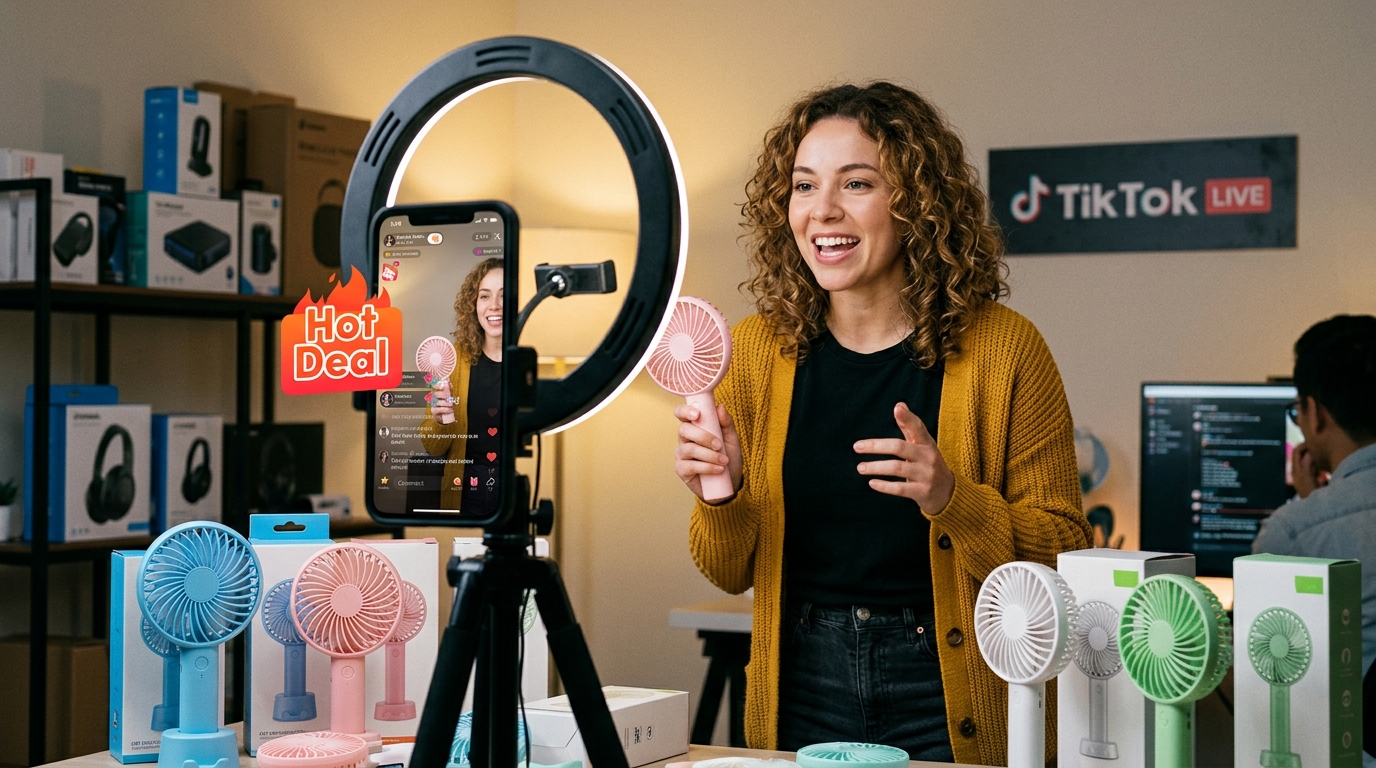
One of my creators made nine hundred dollars last week selling fans on his TikTok Live. Not fans as in followers. Fans, the kind that keep you cool. He goes live about twice a day, talks for an hour about why you have to have one of these, and the orders roll in. He just started, and it is working.
What he is doing is affiliate selling, and it is a fantastic place to begin. But here is what I am already coaching him toward, because the ceiling on what he is doing now is lower than it looks. The reason comes down to a single word every creator should have in their vocabulary: dropshipping. To see why it matters, you have to see the ladder he is standing on.
Retail is moving onto the live stream
First, the why-now. Selling on live is not a fad, it is where retail is going. US livestream commerce sales reached an estimated fifty billion dollars and are climbing fast, on track to make up more than five percent of all e-commerce in the country. Analysts now track a category they literally call creator storefront live commerce, where influencers operate as micro-retailers. The skill my fan-selling creator is building is the skill the whole industry is racing toward.
So the live-selling ability is the valuable part, and he has it. The question is what he points it at. Right now he points it at someone else’s product, for a slice of the sale. The ladder is about pointing it at something he owns.
Two ideas that change everything
-
The Ownership Ladder
The path
The progression from selling other people’s products to owning your own retail business. Rung one is affiliate selling, where you own nothing and earn a commission. Rung two is dropshipping, where you own the storefront and customer but not the inventory. Rung three is holding inventory or private label, where margins and control are highest. Each rung trades more risk for more margin and ownership.
-
The Inventory-Free Storefront
The definition
What dropshipping actually is: a retail store you own and brand, where a third-party supplier holds the inventory and ships orders straight to the customer. You control pricing, marketing, and the customer relationship while carrying no inventory risk, earning the margin between the supplier’s wholesale price and your own retail price.
Rung one: affiliate, where you own nothing
Affiliate selling is rung one, and there is nothing wrong with starting there. You promote a product on live, someone buys, you get a commission. No money down, no risk, and you learn the most valuable thing there is: what your audience will actually buy. My fan creator is proving his selling skill in real time, with real dollars.
But look at what he does not have. He does not own the store, so he cannot set the price. He does not own the customer, so he cannot sell them the next thing. He does not own the product, so if the supplier vanishes or cuts the commission, his business vanishes with it. He is the talent in someone else’s operation. A great place to start, a poor place to stop.
Rung two: dropshipping, where you become the owner
This is where dropshipping comes in, and where the word earns its place in every creator’s vocabulary. Dropshipping is a model where you market and sell products from your own store while a supplier handles inventory and shipping. You keep the margin between wholesale and retail. You own the storefront. You set the price. You own the customer. The supplier just holds the boxes and ships them.
For my fan creator, the shift is profound even if the product is identical. Instead of sending buyers to someone else’s listing for a commission, he sends them to his own branded fan store and sets his own price. He keeps the customer for the next product he wants to sell. He has stopped being the talent and started being the owner, and he did it without spending a dollar on inventory. That is the bridge dropshipping builds.
Affiliate rents you the stage. Dropshipping hands you the store. Same skill on the mic, completely different thing to own when the stream ends.
The honest part: dropshipping is the on-ramp, not the jackpot
Now the truth most dropshipping hype leaves out, because the series only works if I am straight with you. Dropshipping is not a high-margin goldmine. Net margins typically run between ten and thirty percent once you account for fees, ads, and returns. And you give up control of product quality, shipping speed, and the returns process. When a supplier ships late or sends a defective fan, the customer blames you, and fixing it is your job.
So dropshipping is not the top of the ladder. It is the on-ramp. Its real value is that it lets you become an owner and learn which products actually sell, at almost no risk. The bigger margins live one rung higher, when you graduate again.
Rung three: inventory, where the margins actually live
Once a product proves itself through your inventory-free storefront, you climb again. You buy that winning product in bulk, or you develop your own private-label version, and now you control the supply chain, the quality, and a much fatter margin. This is the rung your outline was reaching for when you pictured a real store with supply chain and increased margins.
The key is that you do not start here, because starting here means betting cash on products you only hope will sell. Dropshipping is how you find out which products deserve that bet, using other people’s warehouses to run the experiment. You climb to inventory carrying proof, not hope. Here is the whole ladder in order.
- Start with affiliate selling on live. Sell other people’s products for a commission. It proves you can move product and teaches you what your audience buys, with no money down.
- Open an inventory-free storefront. Set up your own branded store and connect a dropshipping supplier. You now own the store, the price, and the customer, with no inventory risk.
- Treat it like a real retail operation. Margins are modest and customer experience is on you. Choose reliable, ideally domestic suppliers, manage returns closely, and pick a niche.
- Graduate to inventory for real margins. Once a product proves itself, hold your own stock or go private label. Higher margins, more control, and a bet backed by proof.
That is why dropshipping belongs in every creator’s vocabulary, even the ones not ready to use it yet. It is the rung that turns a great live seller into the owner of a business. It is the bridge that makes the leap to a real retail operation safe instead of reckless. My fan creator does not need it this week. But the day those nine hundred dollar weeks make him wonder what he is really building, the answer starts with this word.
Frequently asked questions
What is dropshipping in simple terms?
Dropshipping is a retail model where you run your own branded online store, but a third-party supplier holds the inventory and ships orders directly to your customers. You never buy stock upfront. You earn the margin between the supplier’s wholesale price and the retail price you set, while owning the storefront, the pricing, and the customer relationship.
Why should a creator understand dropshipping?
Because retail is moving to live, and selling on stream is becoming a core creator skill. Affiliate selling is the starting point, but the creator owns nothing and just earns a commission. Dropshipping is the next rung: it lets a creator become an actual store owner, owning the customer and the brand, without the capital risk of buying inventory. It is the bridge from being talent to being an owner.
Is dropshipping a high-margin business?
No, and that is important to understand. Dropshipping margins typically run from about 10 to 30 percent, and you give up control over product quality, shipping speed, and returns. The bigger margins come later, when a creator graduates to holding their own inventory or private-label product. Dropshipping’s value is low-risk entry into ownership, not the highest margins on the ladder.
What is the difference between affiliate marketing and dropshipping?
With affiliate marketing you promote someone else’s product and earn a commission on sales, owning nothing: not the store, the customer, or the pricing. With dropshipping you own a branded store and set your own prices, and a supplier ships the product. Affiliate is rung one of the ownership ladder; dropshipping is rung two, where you start owning the business itself.
Is dropshipping still worth it for creators in 2026?
It can be, if treated as a real retail operation rather than passive income. Competition is high and margins are tighter than years ago, so success depends on niche selection, reliable suppliers, and strong customer service. For a creator with an engaged audience and live-selling ability, it is a practical, low-risk way to step into owning a store and to test which products deserve deeper investment.
Discover more from SearchLight Social
Subscribe to get the latest posts sent to your email.