 Skip to content
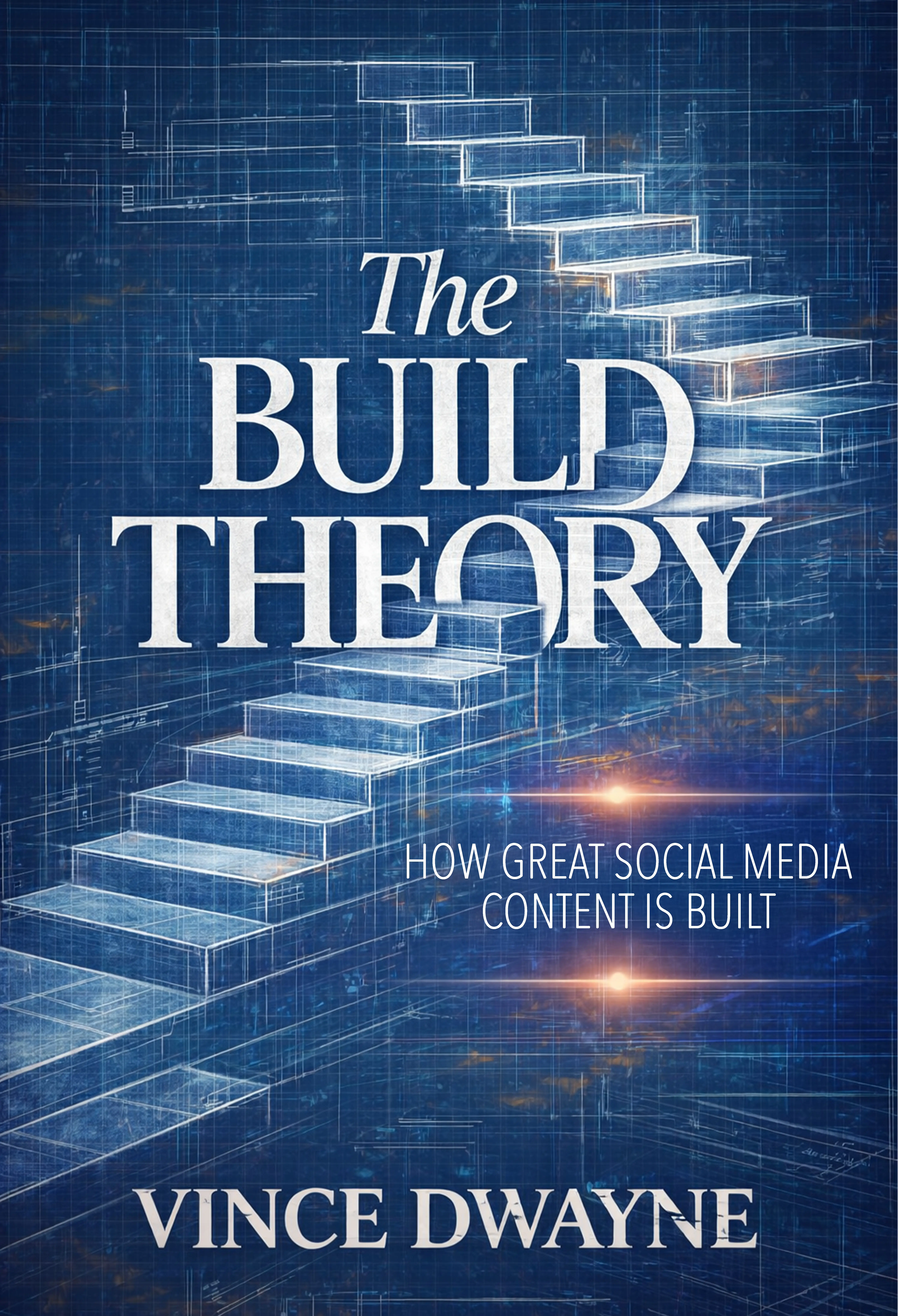
Most books about social media age quickly.
They’re built around platforms, tactics, or momentary advantages—what works right now. When the landscape shifts, the advice expires. The Build Theory takes a very different approach, and that’s precisely why it stands out.
Written by recognized author and social media coach Vince Dwayne of Searchlight Social, The Build Theory isn’t a guide to posting more effectively. It’s a book about why certain creators, brands, and ideas endure while others quietly disappear—no matter how hard they try.
A Structural Lens to Content Creation, Not a Tactical One
What makes The Build Theory unusual is what it refuses to do.
It doesn’t chase algorithms.
The book doesn’t obsess over virality.
It doesn’t promise shortcuts.
Instead, it treats social media as something closer to architecture than marketing. The book argues—subtly and convincingly—that attention behaves predictably over time, and that most content fails not because it’s bad, but because it’s structurally unsound the build theory manuscript.
This framing alone separates the book from the crowded category of “how-to” creator manuals.
Written for People Who’ve Already Tried Everything
The Build Theory isn’t aimed at creators looking for hacks; it’s written for creators, founders, and influencers who are already posting consistently and still find audiences are not staying.
The tone is reflective rather than instructional. Observational rather than prescriptive. It reads less like a marketing book and more like a long-form explanation for a frustration many people feel but rarely articulate.
That restraint is intentional—and effective.
Authority Without Posturing
Vince Dwayne’s background as a social media coach at Searchlight Social shows up in the book, but never as credential-waving. There’s no chest-thumping, no exaggerated case studies, no forced success stories.
Instead, the authority comes from clarity.
The book demonstrates a deep understanding of human attention, creative burnout, and the psychological cost of chasing performance metrics. It speaks fluently to people who’ve experienced “almost working” content—and explains why that state is often more dangerous than outright failure.
Why This Book Feels Timely
When creators are burning out faster than they’re scaling, The Build Theory feels less like a trend book and more like a course correction.
It questions assumptions the industry has treated as fact for over a decade:
- That visibility equals success
- That consistency alone creates momentum
- That more output solves structural problems
Rather than offering replacement tactics, it offers a different way of seeing the work.
Who This Book Is For
This is a book for:
- Creators who want longevity, not spikes
- Founders building personal brands alongside companies
- Strategists tired of optimizing symptoms instead of causes
- Anyone who feels they’re producing content faster than meaning
It’s not a playbook. It’s a lens.
And lenses tend to last longer than rules.
The Final Review
The Build Theory doesn’t just teach you how to succeed on social media.
It explains why winning, as it’s currently defined, may be the wrong goal altogether.
That alone makes it one of the more thoughtful—and durable—entries in the modern social media canon.
Key Takeaways
- The Build Theory offers a unique perspective on social media, focusing on the enduring nature of content rather than tactics or algorithms.
- Authored by Vince Dwayne, the book addresses why some creators and ideas persist while others fade away.
- It targets creators of all types, providing a reflective and observational tone rather than a prescriptive approach.
- The book challenges common industry assumptions about visibility and content output, promoting a deeper understanding of structural issues.
- Ultimately, The Build Theory presents a thoughtful framework for sustainable social media success, making it a standout book about social media.
People Also Ask
Great content isn’t defined by performance in a single post, it’s defined by return behavior. Content is great when people come back without being prompted, not when it spikes once and disappears. Long-term success comes from building content that feels structurally complete, not just entertaining or informative in isolation.
Most channels stall because they optimize output instead of structure. Posting frequently, following trends, or improving production quality can’t compensate for missing foundations like clear perspective, emotional resonance, or continuity. Instead of resetting with every post, growth becomes consistent when content is built to accumulate meaning over time.
Neither matters if the underlying structure is weak. Consistency amplifies whatever you’re already doing—if the structure is flawed, consistency accelerates burnout. Quality without structure creates “almost working” content. Sustainable channels prioritize coherence first, then quality, then consistency.
Purely helpful content resolves too quickly. Once the audience gets the answer, attention disengages. Successful educational channels design learning as discovery, not instruction, keeping curiosity active long enough for understanding to turn into memory and return behavior.
Storytelling isn’t a tactic, it’s what turns content into a place instead of a sequence of posts. Strategy determines what you say; storytelling determines whether people remember where they are with you. Channels without narrative continuity feel transactional. Channels with it feel familiar—and familiarity drives loyalty.
Chasing visibility instead of building something people want to stay inside. Metrics like views and followers measure exposure, not attachment. The most successful channels are designed around how humans form trust, memory, and belonging.
Discover more from SearchLight Social
Subscribe to get the latest posts sent to your email.